
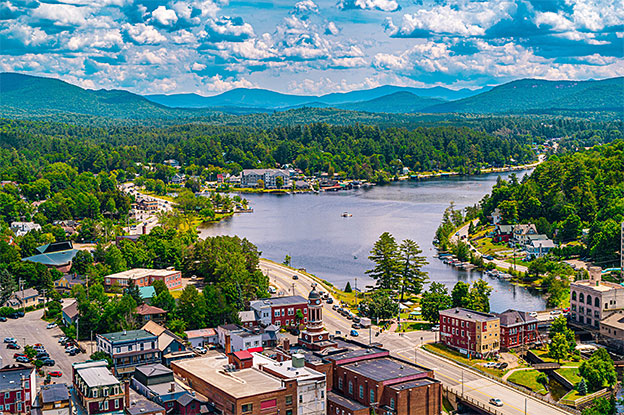
If you ever find yourself winding through the high, pine-scented peaks of the Adirondack Mountains, you might stumble upon a village that feels a little different from your average mountain getaway. Saranac Lake, New York, doesn’t just have history; it has a soul shaped by reinvention.
Long before it became a haven for paddlers, artists, and Winter Carnival enthusiasts, this quiet mountain community was world-renowned as a place of literal survival. It’s a town built on fresh air, groundbreaking science, and a stubborn community spirit that refuses to fade.
Before the mid-1800s, the area surrounding Saranac Lake was primarily known to the Mohawk and Algonquin peoples, who navigated its intricate network of waterways for hunting and seasonal travel. European settlers arrived relatively late, around the 1820s, drawing in rugged loggers and wilderness guides who saw the Adirondacks as a wild frontier.
Jacob Smith Moody was the first to pitch a permanent homestead here, followed closely by Captain Pliny Miller, who built a sawmill in 1827 that established the footprint of the future village. For a few decades, Saranac Lake was a sleepy outpost for adventurers until a terrible disease and a brilliant doctor changed its destiny forever.
How Legendary Guides Put Saranac Lake on the Map
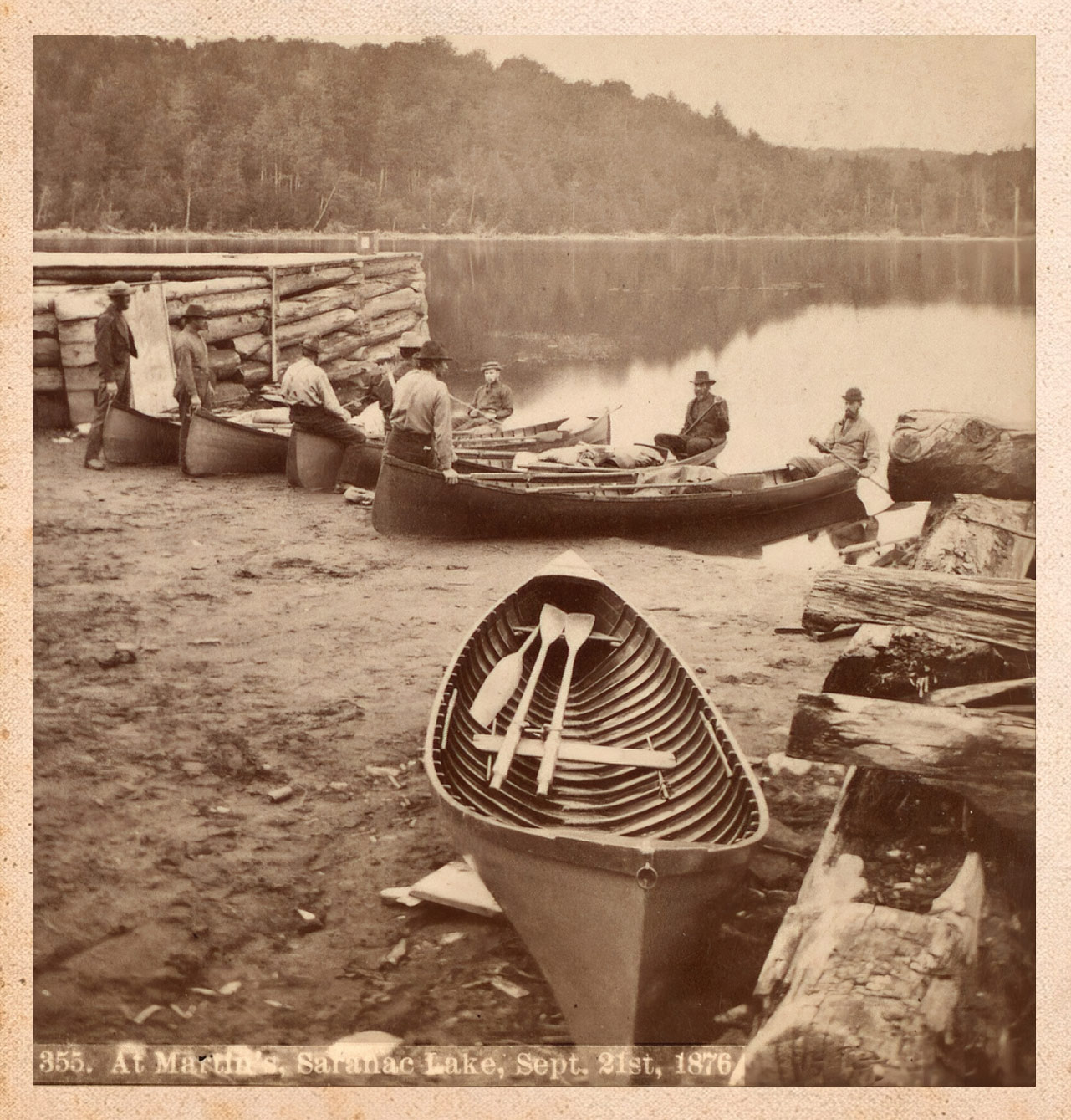
Long before it became famous as a medical sanctuary, Saranac Lake was a magnet for restless city dwellers seeking an escape from the choking smog and frantic pace of late-19th-century industrial America. The region gained widespread fame after intellectuals and artists, most notably the “Philosophers’ Camp” of 1858, which included Ralph Waldo Emerson and James Russell Lowell, ventured into the nearby woods and praised the restorative powers of the Adirondacks. Soon, a wave of wealthy tourists, sports enthusiasts, and romantic adventurers flocked to the area. They arrived by stagecoach and later by train, eager to trade their tailored suits for flannel shirts and immerse themselves in a rugged, untamed wilderness that promised both physical rejuvenation and spiritual awe.
Navigating this vast, trackless expanse of dense forests, hidden bogs, and interconnected waterways was no small feat, which gave rise to a legendary breed of local heroes: the Adirondack wilderness guides. These guides, including famed figures like Mitchell Sabattis, Thomas Peacock, and members of the Moody family, were the gatekeepers of the wilderness.
Part woodsmen, part philosophers, and entirely indispensable, guides possessed an uncanny knowledge of the terrain. For a few dollars a day, a guide would lead urban “sportsmen” on deep excursions into the backcountry, expertly reading the sky for approaching storms, tracking game through the brush, and handling the heavy lifting of wilderness travel with effortless grace.
A typical guided trek was a masterclass in woodcraft and hospitality. Guides would row their clients across Saranac Lake in specialized, ultra-light Adirondack guideboats, then hoist the boats onto their own backs to carry them across rugged portages. On hikes through the dense woods, they would teach tourists how to spot deer trails, identify wild flora, and cast for native brook trout.
When the sun began to dip below the pine canopy, the guides transformed the wilderness into a comfortable home by chopping firewood, erecting lean-tos from balsam boughs, and cooking legendary open-pit feasts of fresh fish and venison. These immersive journeys permanently transformed Saranac Lake from a remote logging outpost into the birthplace of American outdoor tourism
The Healing Wild: The Cottage Sanatorium Era
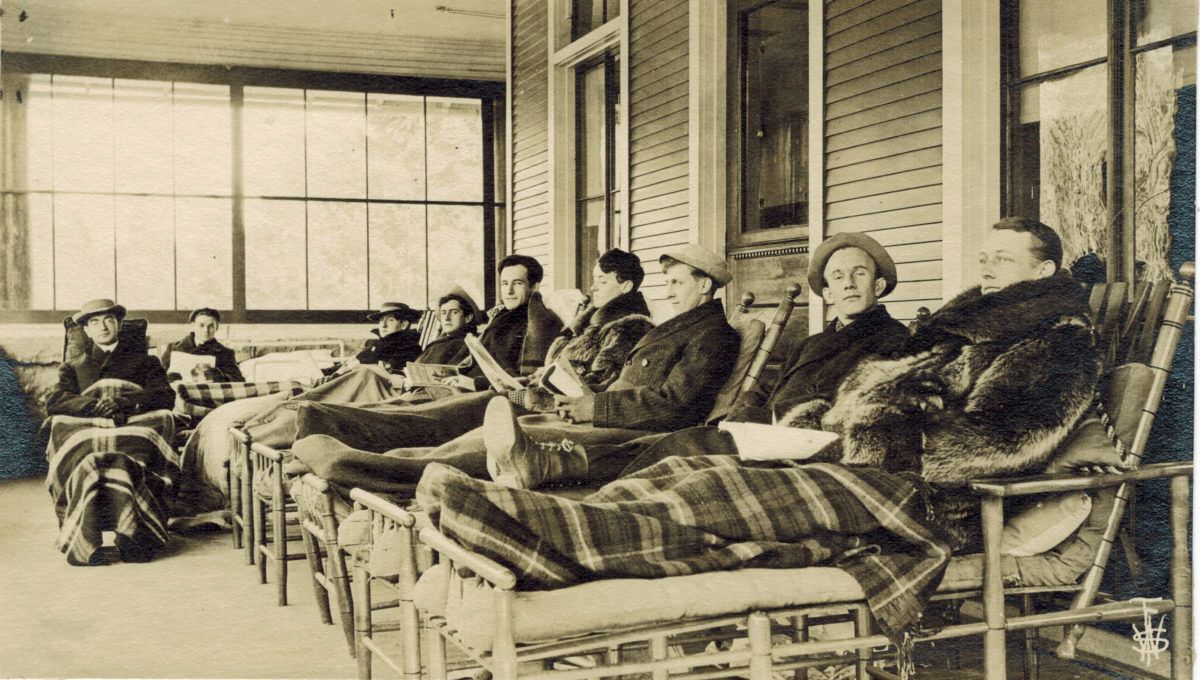
In the late 19th century, Tuberculosis (TB), then known as “Consumption”, was the leading cause of death in America. It devastated crowded, industrial cities. Enter Dr. Edward Livingston Trudeau. Diagnosed with the terminal disease himself, Trudeau retreated to the Adirondacks in 1873, fully expecting to die in the peaceful wilderness. Instead, a funny thing happened: he got better.
Convinced that a regimen of clean mountain air, an abundance of rest, and a hearty diet was the key to combating the white plague, Trudeau set out to share his discovery with the world.
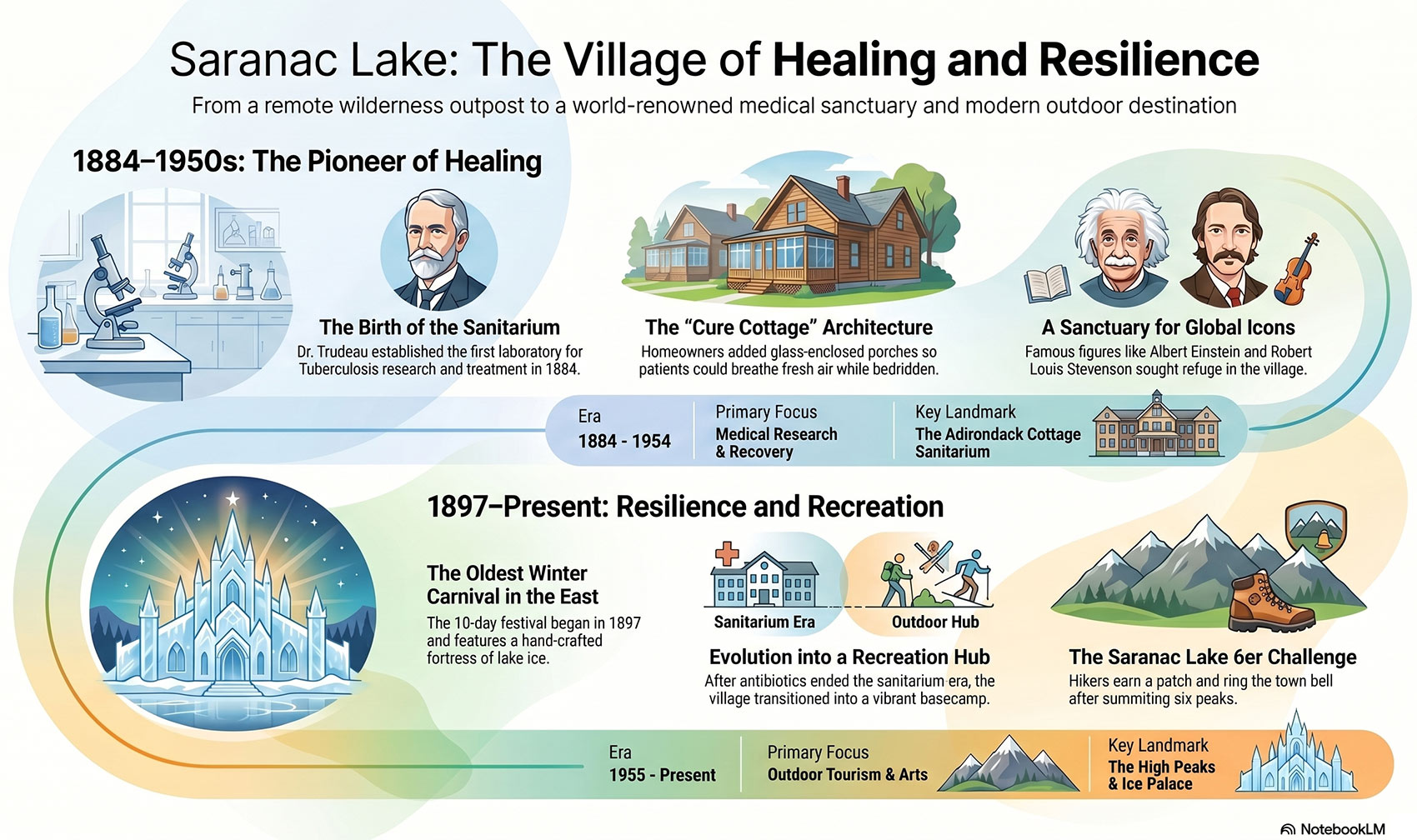
In 1884, he opened the Adirondack Cottage Sanitarium. It started modestly with “Little Red,” a single, tiny one-room cottage housing two factory girls from New York City. Trudeau’s scientific, compassionate approach revolutionized medicine. Saranac Lake quickly transformed from a remote logging outpost into the premier health resort of North America. Tens of thousands of patients flooded the village, turning it into a cosmopolitan hub where world-class doctors rubbed elbows with working-class patients and international celebrities.
Did You Know? The village features a highly unique architectural phenomenon known as “Cure Cottages.” To accommodate the thousands of patients seeking health, local homeowners modified their houses to include large, glass-enclosed “cure porches.” These porches were custom-built with wide doors, so patients could be wheeled directly outside in their beds to breathe the crisp mountain air, even in the dead of winter.
Saranac Lake: A Cultural Crossroads in the Wilderness
Because tuberculosis discriminated against no one, Saranac Lake became an accidental cultural melting pot. Rich and poor alike came to “take the cure.” Among the most famous residents was the beloved Scottish author Robert Louis Stevenson, who spent the brutal winter of 1887–1888 in a local farmhouse. While checking his lungs in the frosty Saranac air, he penned sections of his masterpiece, The Master of Ballantrae, and famously remarked on the fierce cold of the Adirondack winters.
Decades later, the village welcomed another monumental mind: Albert Einstein. Beginning in the late 1930s, Einstein spent his summers sailing a small boat on Lower Saranac Lake. He loved the anonymity the town provided.
Locals frequently recalled seeing the disheveled genius floating peacefully on the water, occasionally getting stuck when the wind died down and requiring a friendly tow back to shore by a neighbor. It was here, amidst the quiet lapping of Adirondack water, that Einstein relaxed away from the heavy burdens of world politics and physics.
Did You Know? Albert Einstein was actually in Saranac Lake when he learned that the atomic bomb had been dropped on Hiroshima in August 1945. He gave his first historic interview regarding the dawn of the nuclear age right from his summer residence on Knollwood Road.
The Famous Saranac Lake Winter Carnival
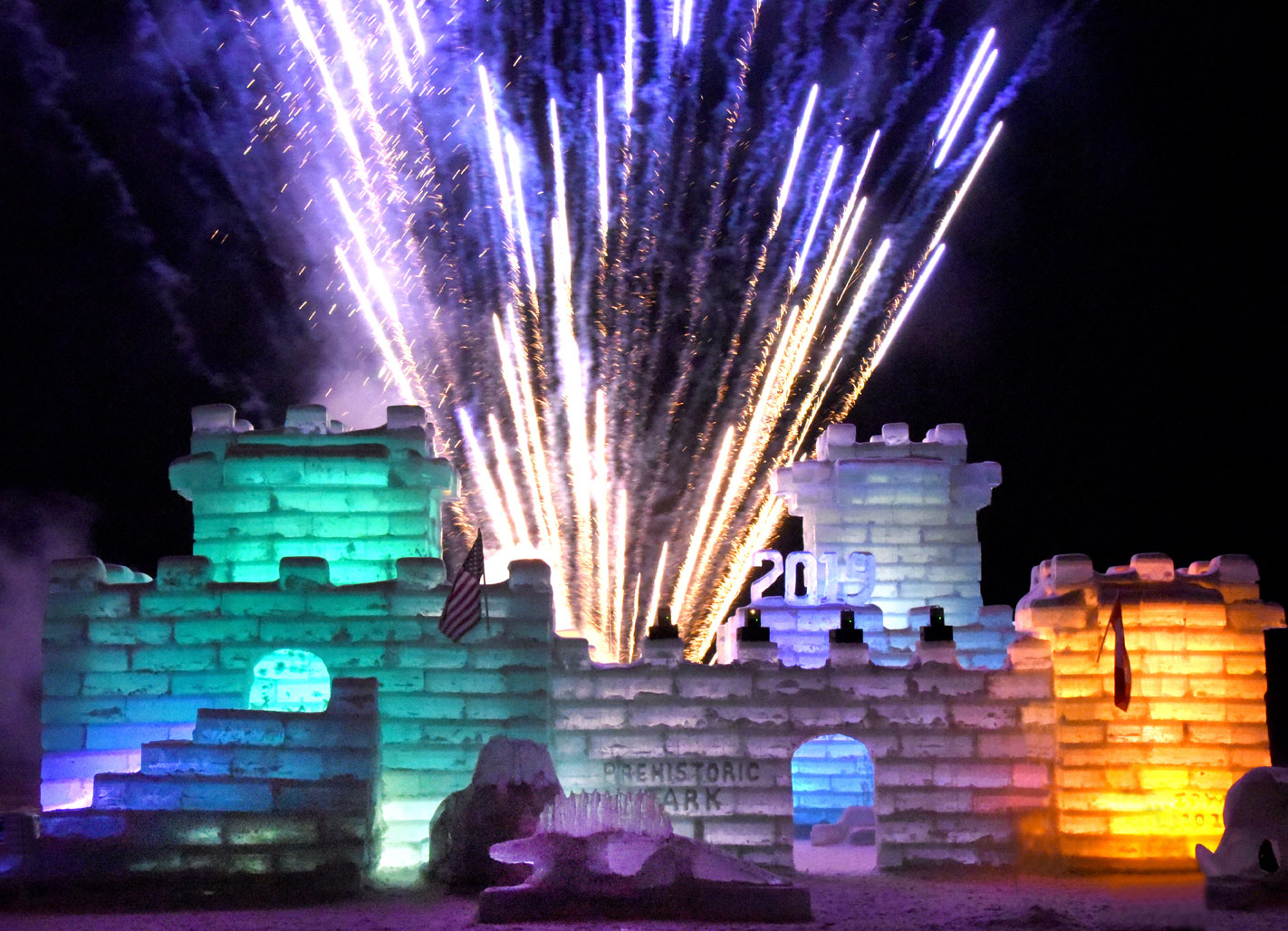
Every year in early February, the village of Saranac Lake sheds its quiet, frosty demeanor and explodes into a vibrant, 10-day celebration known as the Saranac Lake Winter Carnival. Dating back to 1897, it holds the proud title of the oldest winter carnival in the eastern United States, born originally out of a desire to lift community spirits during the long, dark Adirondack winters.
The crown jewel of the event is the legendary Ice Palace, a massive, hand-crafted fortress built directly on the shores of Lake Flower. Volunteers from all walks of life gather in the biting cold to harvest giant blocks of ice from the lake, using vintage saws and modern ingenuity to piece together an architectural marvel complete with intricate ice sculptures, tunnels, and an official throne room.
The Winter Carnival captures the town’s unique, resilient spirit perfectly, proving that instead of merely enduring the brutal North Country winters, Saranac Lake knows exactly how to throw a party in them!
Reinvention and the Modern Village of Saranac Lake
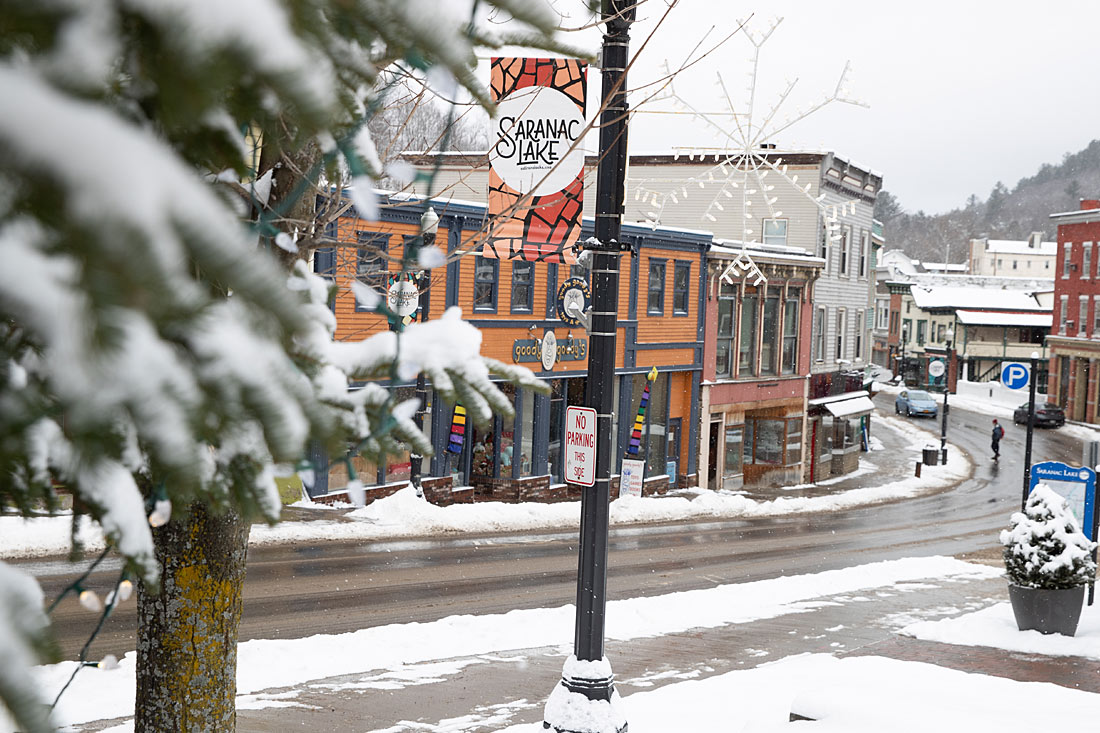
By the mid-1950s, the discovery of effective antibiotics, like streptomycin, brought a sudden end to the sanatorium era. Almost overnight, the village’s primary economic engine vanished. Many towns would have withered away under that kind of pressure, but Saranac Lake did what it does best: it adapted. The very wilderness that had once healed broken lungs now began to heal stressed souls looking for an escape from modern life.
The historic cure cottages were preserved and repurposed into charming private homes and bed-and-breakfasts. The Trudeau Institute transitioned into a world-class biomedical research center that still operates today, investigating modern immunological challenges.
The town of Saranac Lake naturally evolved into a vibrant base camp for outdoor recreation. Paddlers flock to the St. Regis Canoe Area, hikers conquer the nearby High Peaks, and the downtown area has bloomed into a lively arts district filled with independent shops, galleries, and community-owned enterprises.
Did You Know? Saranac Lake boasts the wildly successful “Saranac Lake 6er“ hiking challenge. Hikers who climb the six peaks surrounding the village, including Baker, Haystack, McKenzie, Ampersand, Scarface, and St. Regis, earn a coveted patch. If you complete all six peaks in a single 24-hour period, you officially become an “Ultra 6er” and get to ring the historic town bell located downtown.
Today, walk down Main Street, and you can still feel the palpable layers of the past. The grand Hotel Saranac, fully restored to its 1920s glory, anchors a downtown that feels remarkably authentic. It’s a place that honors its history without being trapped by it. Saranac Lake remains a community defined by resilience, warmth, and an enduring belief that fresh air and a welcoming spirit can conquer just about anything.